Anycast endpoints
- One address, routed to the nearest of 10 points of presence
- Locations across Europe, the US, and Asia

Triton Preconfs streams the transactions a leader's scheduler has already accepted, before the block is built, executed, or cut into shreds. You get the raw transaction bytes, the slot, and, on Harmonic, the execution result. All filtered to the accounts you care about, over gRPC to your own servers.
Sourced from Harmonic and Jito BAM


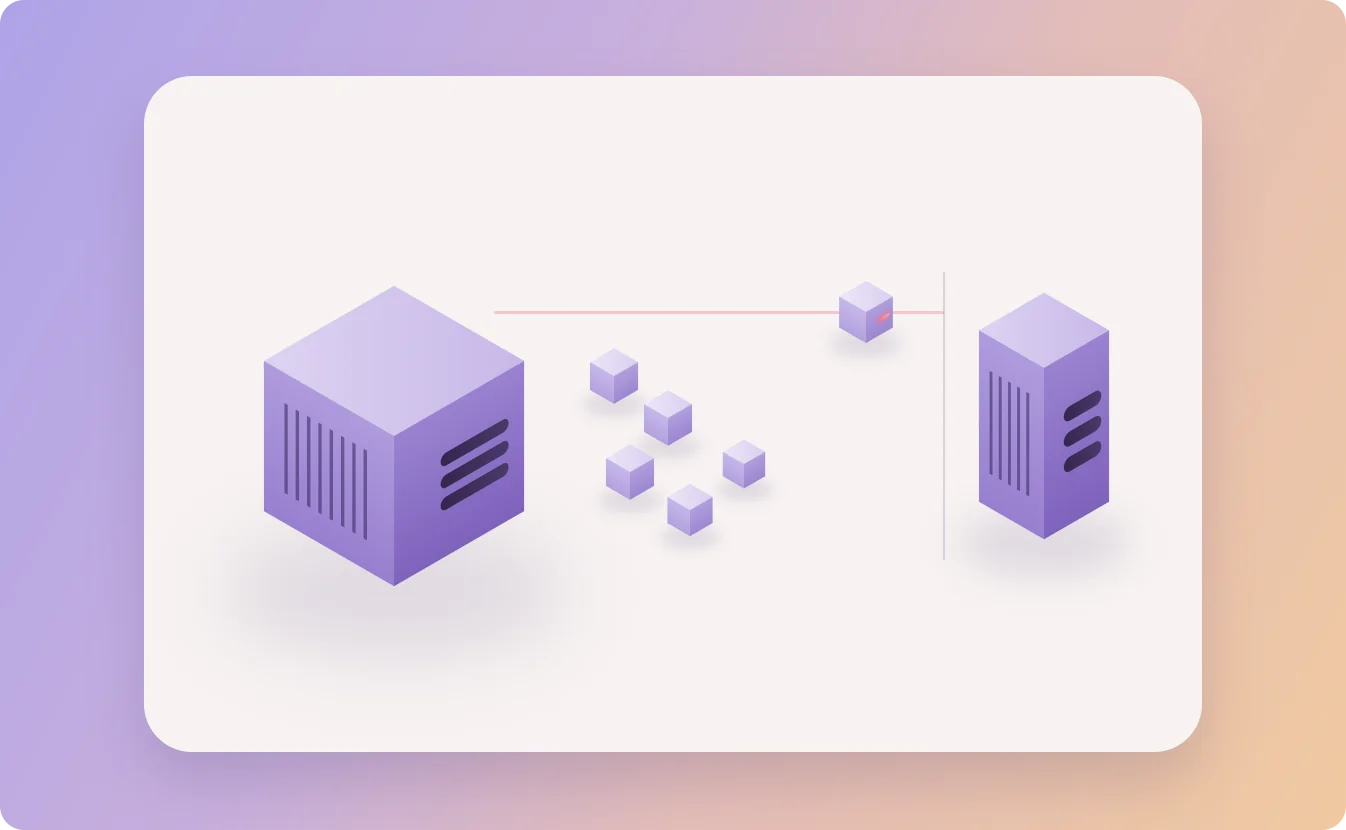
Shreds are the block after the leader has packed and executed it. They're the earliest thing most of the network will ever see, which is why the race for early data has always started there.
A preconf is the step before that. It's the leader saying, "This one is in," while the block is still being assembled. Triton Preconfs forwards that signal to you as it happens, one message per transaction, before any shred exists.
Built for HFT desks, market makers, and anyone who needs to know what's landing before the shreds exist.
Shreds are the block after the leader has packed and executed it. They're the earliest thing most of the network will ever see, which is why the race for early data has always started there.
A preconf is the step before that. It's the leader saying, "This one is in," while the block is still being assembled. Triton Preconfs forwards that signal to you as it happens, one message per transaction, before any shred exists.
Built for HFT desks, market makers, and anyone who needs to know what's landing before the shreds exist.
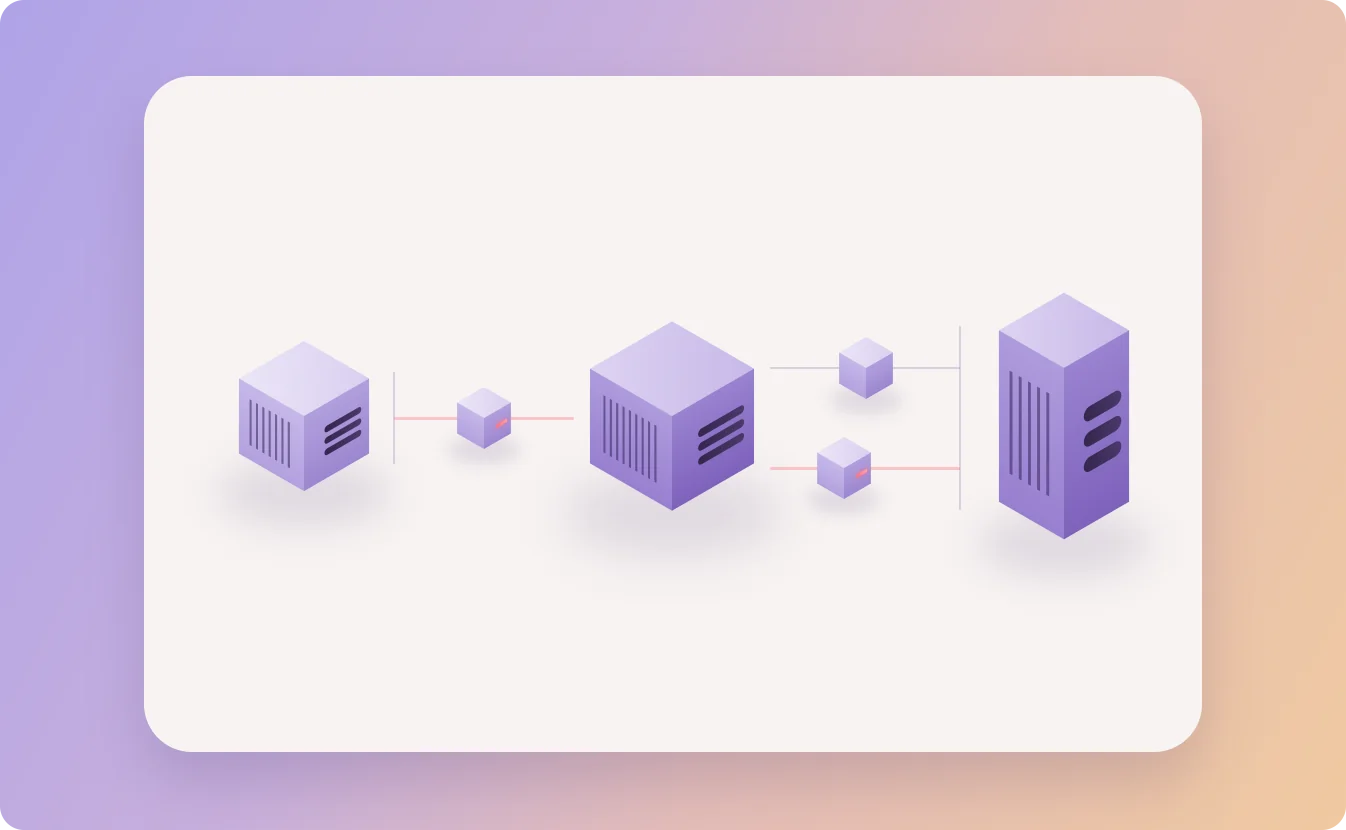
Preconfs come from whoever commits transactions to the block, and our two sources do that differently. You subscribe to both through the same request, the same message format, and the same token; what differs is where the commitment comes from and what it carries.
The Harmonic block builder sits in front of the validator's TPU. It executes each transaction in its own runtime, commits it to the block, and streams the result to us: success, execution failure, or fees only. The validator then executes the same transaction again when it produces the block. A Harmonic preconf means the builder ran it and is putting it in; the result you see is the builder's run, and the validator's run is the one that lands on chain, normally with the same outcome.
The BAM proxy sends each transaction to the validator, the validator executes it as part of building the block and acknowledges back, and only then does the proxy stream it out. A BAM preconf means the validator has already executed it. There's one execution and no result field; the acknowledgement is the guarantee. BAM also flags bundle intent, so you can see when a transaction is set to revert on error.
A preconf is the leader's commitment, not finality.
In both cases, a preconf tells you the leader has committed to a transaction. It doesn't tell you the block will land: a slot can still be skipped or forked, and we measure how often rather than hide it. That's what the slot end markers and Harmonic's execution results are for, and it's why we publish landed and unlanded numbers instead of asking you to take the feed on faith.
Preconfs come from whoever commits transactions to the block, and our two sources do that differently. You subscribe to both through the same request, the same message format, and the same token; what differs is where the commitment comes from and what it carries.
The Harmonic block builder sits in front of the validator's TPU. It executes each transaction in its own runtime, commits it to the block, and streams the result to us: success, execution failure, or fees only. The validator then executes the same transaction again when it produces the block. A Harmonic preconf means the builder ran it and is putting it in; the result you see is the builder's run, and the validator's run is the one that lands on chain, normally with the same outcome.
The BAM proxy sends each transaction to the validator, the validator executes it as part of building the block and acknowledges back, and only then does the proxy stream it out. A BAM preconf means the validator has already executed it. There's one execution and no result field; the acknowledgement is the guarantee. BAM also flags bundle intent, so you can see when a transaction is set to revert on error.
A preconf is the leader's commitment, not finality.
In both cases, a preconf tells you the leader has committed to a transaction. It doesn't tell you the block will land: a slot can still be skipped or forked, and we measure how often rather than hide it. That's what the slot end markers and Harmonic's execution results are for, and it's why we publish landed and unlanded numbers instead of asking you to take the feed on faith.
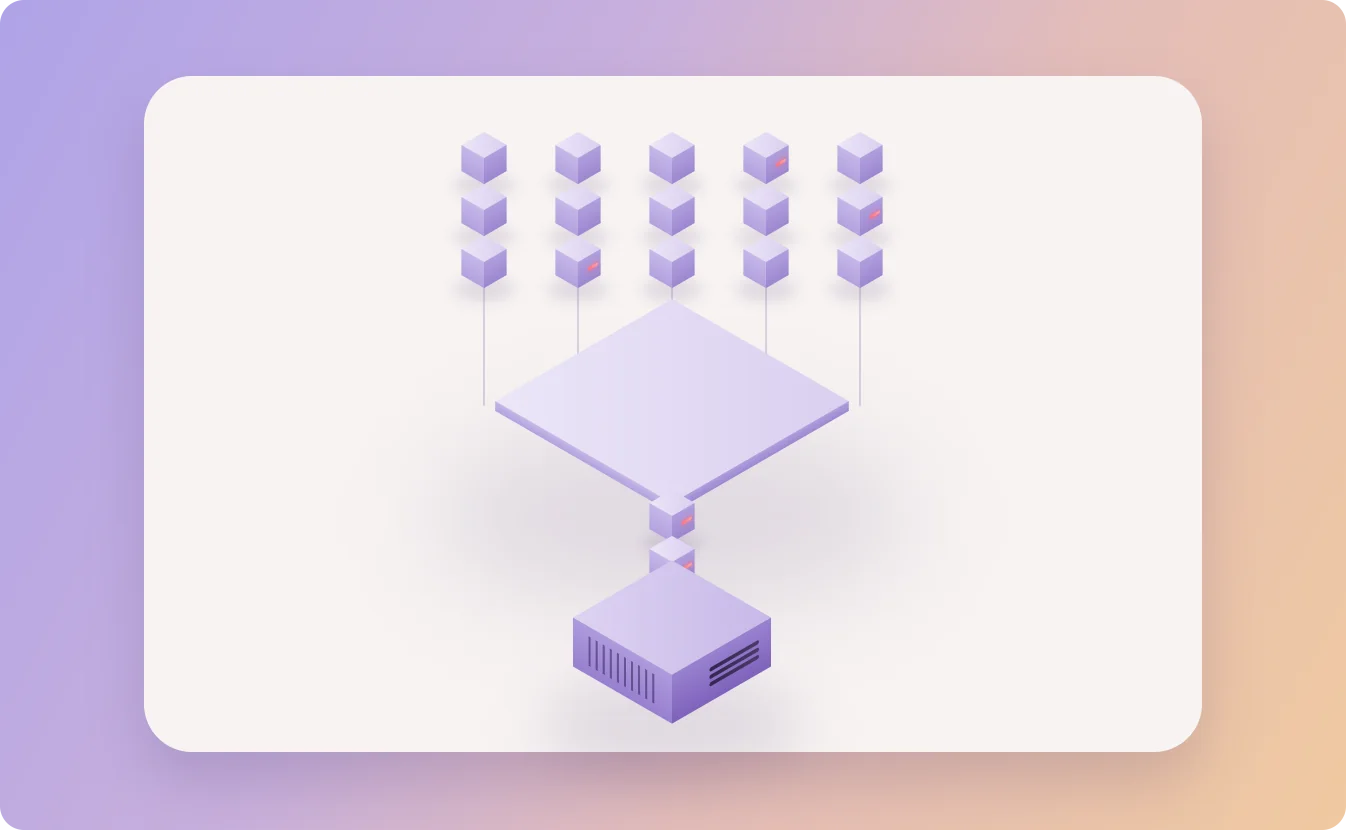
Nobody gets the full feed. You tell us what matters and we forward the transactions that match, so your bandwidth goes on flow you can act on.
Nobody gets the full feed. You tell us what matters and we forward the transactions that match, so your bandwidth goes on flow you can act on.
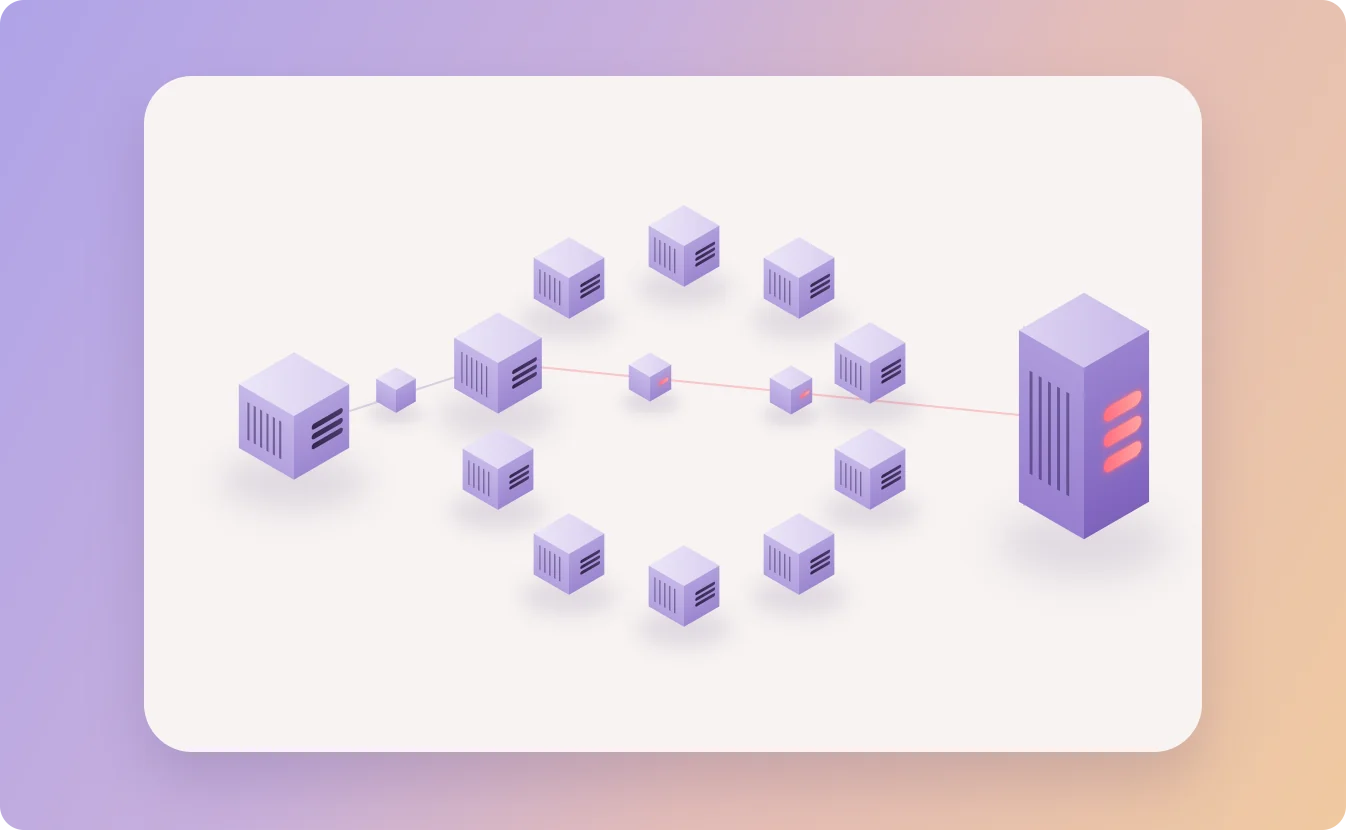
You reach us through one address, preconfs.rpcpool.com, announced from all 10 of our points of presence across Europe, the US, and Asia. Your connection lands on whichever one is closest to you on the network; you don't choose it, and you don't need to.
The region is a required field in every subscribe request, and it picks whose preconfs you get: Harmonic Amsterdam, BAM Frankfurt, and so on. One stream serves one region, and every point of presence ingests every region, so wherever anycast lands you, you can subscribe to any of them. Anycast decides where you talk to us; the region decides whose preconfs you get. Pick the region by where the leader is, not by where you are.
You reach us through one address, preconfs.rpcpool.com, announced from all 10 of our points of presence across Europe, the US, and Asia. Your connection lands on whichever one is closest to you on the network; you don't choose it, and you don't need to.
The region is a required field in every subscribe request, and it picks whose preconfs you get: Harmonic Amsterdam, BAM Frankfurt, and so on. One stream serves one region, and every point of presence ingests every region, so wherever anycast lands you, you can subscribe to any of them. Anycast decides where you talk to us; the region decides whose preconfs you get. Pick the region by where the leader is, not by where you are.
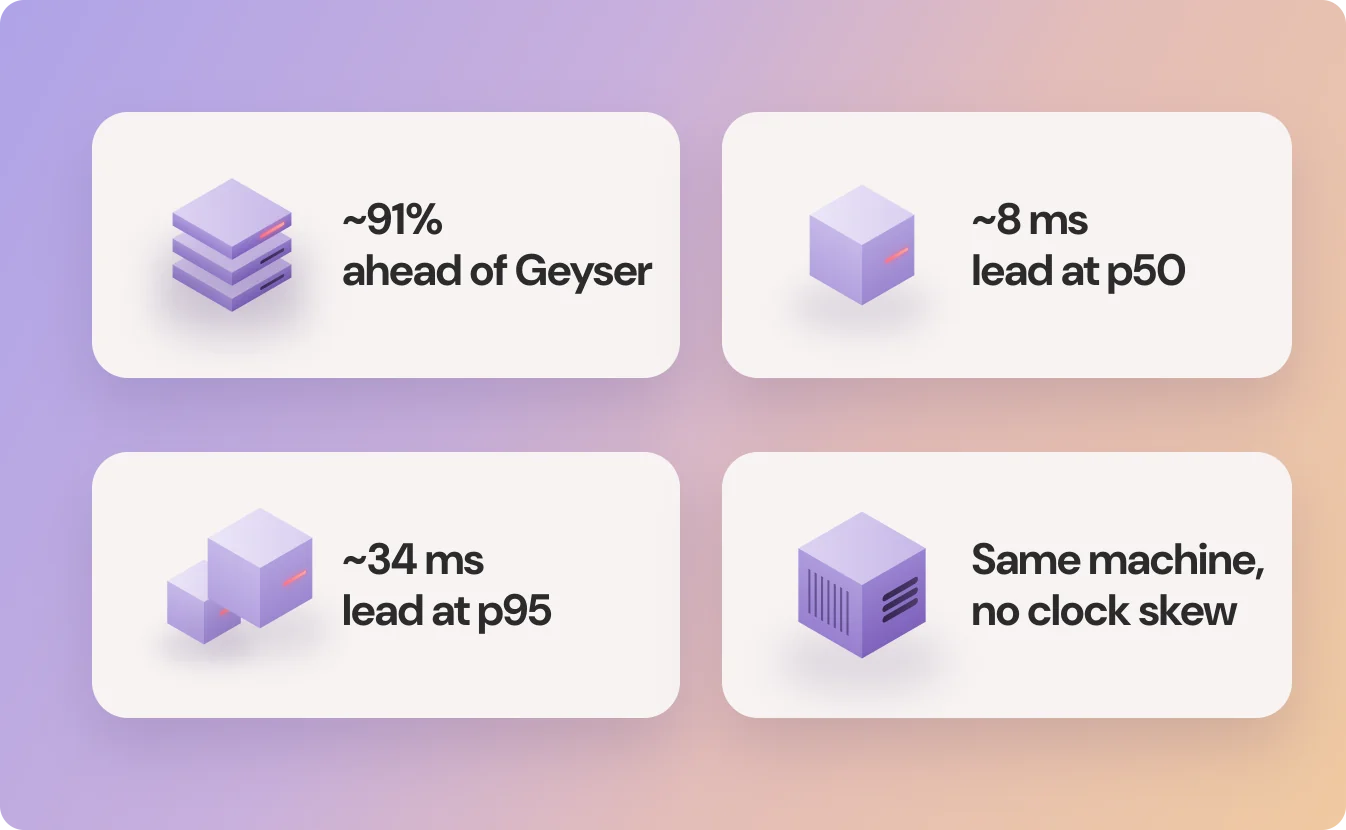
We measure this ourselves rather than quoting a benchmark from a good day. Monitors in every point of presence match each preconf against a Geyser stream by signature and record which arrived first, on the same machine, so there's no clock skew in the numbers.
We measure this ourselves rather than quoting a benchmark from a good day. Monitors in every point of presence match each preconf against a Geyser stream by signature and record which arrived first, on the same machine, so there's no clock skew in the numbers.
Anycast endpoints
Server-side filtering
Slot boundaries in-stream
Two feeds, one integration
Level playing field
Direct support channel
Preconfs are billed on usage, so what you pay tracks the flow you actually subscribed to. Full rates are on the pricing page.
Preconfs isn't self-serve. We turn it on per subscription after a conversation, the same way we handle Triton Shred Streaming. That's deliberate: capacity in the busiest few hundred milliseconds of a slot is finite, and we'd rather know who we're serving.