






Designed to be open-source
- Self-hostable on commodity hardware
- Program-scoped ingestion via include/exclude lists
- Soon open-sourcing under AGPL-3.0 as part of the RPC 2.0

Tailored account indexes on shared infrastructure replace full-chain scans, so reads land faster with far fewer timeouts and rate-limit hits.

Cloudbreak watches incoming gPA requests and creates tailored PostgreSQL indexes automatically. Once an index exists, all matching queries skip the raw scans from that point on, with zero changes on your end.
Cloudbreak watches incoming gPA requests and creates tailored PostgreSQL indexes automatically. Once an index exists, all matching queries skip the raw scans from that point on, with zero changes on your end.

Unlike Agave, which limits apps to the validator's native indexes, Cloudbreak lets you query account data exactly the way your app's logic needs to display it, adapting to your frontend on the go and giving Solana state the flexibility of a database.
Unlike Agave, which limits apps to the validator's native indexes, Cloudbreak lets you query account data exactly the way your app's logic needs to display it, adapting to your frontend on the go and giving Solana state the flexibility of a database.
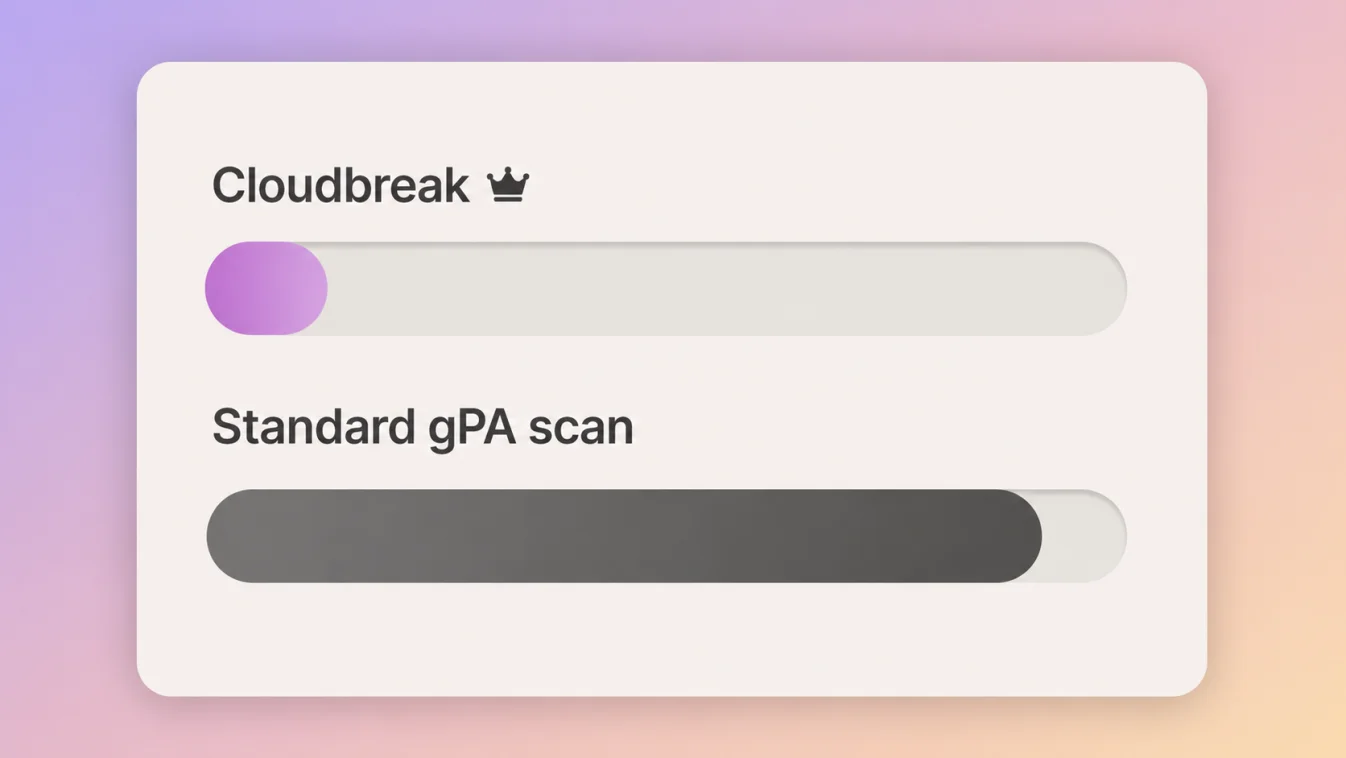
Every gPA query that matches an index is served by a PostgreSQL lookup, skipping a full-chain scan. gTABO and gTABD avoid scans entirely via denormalised columns. The result is an order-of-magnitude latency drop on the heaviest reads on Solana.
Every gPA query that matches an index is served by a PostgreSQL lookup, skipping a full-chain scan. gTABO and gTABD avoid scans entirely via denormalised columns. The result is an order-of-magnitude latency drop on the heaviest reads on Solana.
Designed to be open-source
Built to be flexible
No premium for indexed reads
Modular infrastructure built for scale
Intelligent abuse prevention
Direct support channel on every endpoint